
The British Invasions of the Río de la Plata
 Andres Aguilar
Two British military expeditions. Both unauthorized by London. Both ended in humiliation. Yet these botched invasions of Buenos Aires in 1806 and 1807 set off a chain of events that no general planned and no empire anticipated — and quietly laid the gr...
A general invades Buenos Aires without his own government's permission, with fewer than two thousand soldiers. He takes the city in two days. Forty-five days later, he gets thrown out. He comes back the following year with ten thousand men. He gets thrown out again. The British never tried again.
It sounds like something out of a novel, but it happened. And it's one of the reasons Argentina exists as an independent country. The British Invasions of 1806 and 1807 are one of those episodes that deserve to be far better known than they are — because they have everything: drama, combat, unlikely heroes, a cowardly viceroy, women fighting from the rooftops, and the quiet birth of a national identity. But above all, they are the moment when a colonial society looked in the mirror and realized it could govern itself.
Europe on Fire and the Río de la Plata on the Map
To understand why the British decided to invade Buenos Aires, you have to look at what was happening in Europe in the early 19th century. Napoleon was conquering the continent at an unprecedented pace. Spain and France were allies against Britain. The British were fighting on every front imaginable — Europe, the Caribbean, India. They needed new markets, new sources of resources, new trade routes to compensate for what they were losing on the continent.
The Río de la Plata entered that picture as an opportunity. Buenos Aires in 1806 was a Spanish colonial city of roughly forty thousand people — relatively minor compared to Mexico City or Lima, which were the crown jewels of Spanish America. It was a secondary port, far removed from the great centers of colonial power. But the British knew two things: silver and trade were flowing through it, and its defenses were weak.
The city itself was a modest place. The streets were unpaved dirt that turned to mud with every rainstorm. The houses were low, one or two stories, built around interior courtyards. The elite lived near the Plaza Mayor — today's Plaza de Mayo — in residences with wrought-iron colonial grating. The Fort, the viceroy's seat and the symbol of Spanish power, stood where the Casa Rosada stands today, facing the river. It was a functioning city, but no one in London would have considered it particularly difficult to take.
Society was rigidly hierarchical and shot through with tensions that the colonial regime barely contained. At the top were the peninsulares — Spaniards born in Spain, who monopolized the most important posts. Below them came the criollos: descendants of Spaniards born in the Americas, with land, money, and education, but locked out of real political power. That accumulated resentment was a visible crack in the structure of authority — roughly equivalent to the frustration of a class of people who had built everything but were still told they had no say in running it. Further down, mestizos, indigenous peoples, free Black residents, and enslaved people completed a social pyramid with tensions at every level.
The Spanish commercial regime made everything worse. The colonies could only trade with Spain, and Spain set prices unilaterally. The result was inevitable: a massive, perfectly organized black market. Buenos Aires merchants traded with the British, the Portuguese, and anyone else who offered better terms, because doing so was far more profitable than following the rules. There was a parallel economy operating in plain sight, and everyone knew it.
Beresford, Popham, and the Invasion Nobody Authorized
The British had already demonstrated in 1806 their ability to move nimbly on the colonial chessboard. That year they had taken the Cape of Good Hope in South Africa — Dutch territory — with relative ease, because the Netherlands was occupied by France and couldn't defend its remote possessions. The success at the Cape inspired in certain British officers an idea that in hindsight seems almost absurd in its audacity: If we took the Cape that easily, why not try South America?
The man who turned that idea into action was William Carr Beresford, an Irish-born general in the service of the British Crown, around thirty-eight years old at the time. He was in South Africa following the taking of the Cape, and the notion of an expedition to the Río de la Plata had taken root in his mind. He found a perfect partner in Commodore Home Riggs Popham, commander of the naval fleet in the region — an ambitious man willing to roll the dice if the prize was big enough.
Beresford and Popham decided to invade Buenos Aires entirely on their own, without authorization from London. It was, in essence, a private venture dressed up as a military operation.
The reasoning was straightforward: if they succeeded, the government would praise them and take the credit. If they failed, it was their problem. With that logic, they scraped together what they could — sixteen hundred soldiers and a handful of ships — and set out from the Cape in April 1806\. They reached the Río de la Plata in June. They assessed Montevideo and found it better defended, so they continued on to Buenos Aires.
On June 25, 1806, British troops landed at Quilmes, just south of the city. The acting viceroy was Rafael de Sobremonte — a typical colonial official of the period: more politician than soldier, more administrator than leader. When word reached him that the British were coming, his response secured his place in history in the worst possible way.
Sobremonte loaded the royal treasury onto carts and fled toward the interior city of Córdoba. He left Buenos Aires without defense, without leadership, and without a single clear instruction to his subordinates. It was a cowardice that history never forgave him: he was removed from office, tried, and remembered for two centuries as the symbol of colonial incompetence. The British marched toward the city with almost no resistance. On June 27, 1806, Beresford entered with his troops and the British flag flew over the Fort of Buenos Aires. They had conquered the capital of the viceroyalty in forty-eight hours.
The Reconquest: A Frenchman Organizes the Creole Resistance
The British miscalculated one fundamental thing. They assumed that the criollos — fed up with the Spanish monopoly and the incompetence of their rulers — would welcome the invaders with relief, perhaps even enthusiasm. In part they weren't wrong: some merchants who were already trading illegally with the British looked favorably on the promise of free trade that Beresford offered. But they underestimated something that doesn't show up in any intelligence report: the gut-level refusal to be governed by a foreign power, the pride of a place that, however secondary in the colonial scheme of things, already had an identity of its own.
Beresford tried to be a reasonable occupier. He prohibited looting and attempted to win over the local elite with economic promises. But most of the population was furious, and that anger was looking for organization. It found it in the most improbable figure imaginable: a French military officer.
Santiago de Liniers had spent years serving the Spanish Crown in the Río de la Plata region. When Sobremonte fled, Liniers was in Montevideo. While the viceroy was putting distance between himself and the problem, Liniers crossed the river with a handful of soldiers and began organizing resistance on the outskirts of Buenos Aires. He assembled militias of criollos, gauchos, and volunteers armed with whatever was available: muskets, lances, knives. They were not professional troops — but they knew the terrain, and they had something the most trained army in the world couldn't buy: the motivation of people fighting on their own ground.
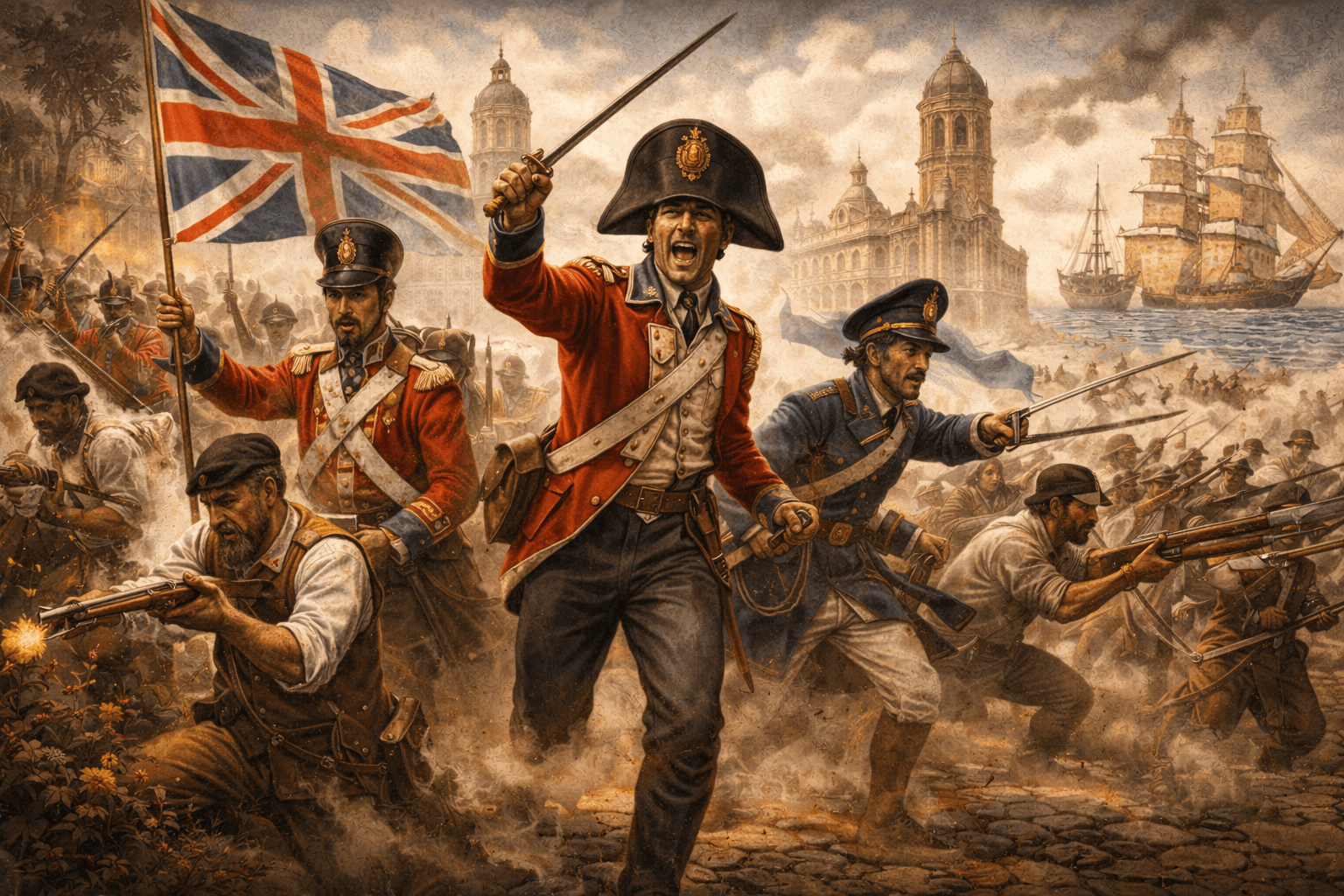
On August 12, 1806, Liniers attacked Buenos Aires with approximately twelve hundred men. The British had comparable forces. The fighting unfolded in the narrow streets of the colonial city, and from the first moments it was clear that this battle would be nothing like an open-field engagement. Residents joined in from rooftops and windows, hurling boiling water, stones, and whatever else came to hand. Women were not bystanders: they reloaded weapons, tended the wounded, and in several instances fought directly.
Beresford understood the situation was untenable. He was surrounded, with no possibility of receiving reinforcements in time and the entire population against him. On August 12, after exactly forty-five days of occupation, he surrendered. The British troops were taken prisoner. Beresford himself was captured and sent to the interior as a prisoner of war.
The criollos had defeated a European power without Spain's help. That realization was more important than the victory itself — it would plant the seeds of independence.
The reconquest was cause for massive celebration. But its real significance ran deeper than the euphoria of the moment. The people of the Río de la Plata had organized their own defense, fought with their own resources, and expelled a professional European army. Spain had been, at best, irrelevant. At worst, an obstacle — Sobremonte had fled with the very funds that could have financed the defense. The implicit conclusion was hard to ignore: they could run things themselves.
The Future Founding Fathers Learn to Fight
There is a detail about the invasions that Argentine history sometimes mentions in passing but deserves far more attention: among the militiamen who participated in the reconquest and the resistance to the second invasion were several of the men who, three years later, would lead the May Revolution that set Argentina on the path to independence.
Manuel Belgrano, thirty-six years old in 1806, was actively involved. Cornelio Saavedra commanded the regiment of criollos known as the Patricios, which would become one of the most distinguished units of the resistance. Juan Martín de Pueyrredón was there as well. All of these men who would later spearhead the independence movement learned something during the invasions that no book could have taught them: that it was possible to organize militarily without depending on Spain, that there were sufficient human resources and political will to sustain a cause of their own.
The militias formed during the invasions did not dissolve after the victory. They consolidated, gradually professionalized, and divided into regiments by origin: criollos, Spaniards, and free Black men and people of African descent — each with their uniforms, their commanders, their identity. Those militias became the foundation on which the Argentine army was built during the independence wars. Without the British Invasions, that army would have taken far longer to exist.
The Second Invasion: Ten Thousand Soldiers and a Worse Defeat
In London, when news arrived that Beresford had taken Buenos Aires, the reaction was euphoric. What they didn't yet know was that he had already been expelled. The government decided to go all in: they assembled an expedition of around twelve thousand soldiers under General John Whitelocke and dispatched it to consolidate what they believed was a successful conquest.
Meanwhile, in Buenos Aires, Liniers was the undisputed hero of the moment. He was appointed acting viceroy, given that Sobremonte was thoroughly discredited. And the city set about preparing for what it knew was coming. The militias were reorganized and expanded. Defenses were reinforced. A strategy was developed that would correct the errors of 1806\.
The second invasion arrived in June 1807\. This time the British didn't improvise — they came prepared, with considerably larger forces and a solid base of operations. They took Montevideo after a siege and crossed the river from there. On June 28, they landed at the Ensenada de Barragán with around ten thousand men. Whitelocke advanced on Buenos Aires with a significant numerical advantage.
The defense this time followed a different logic. Liniers made a tactical decision that would prove brilliant: they would not go out to meet the British in open country, where the professional, better-equipped army would have every advantage. They would let them come into the city. And in the narrow streets, the interior courtyards, the rooftops and windows of colonial Buenos Aires, they would even the odds — or tip them the other way entirely.
The Battle in the Streets: July 1807
On July 5, 1807, the decisive battle began. British columns marched into Buenos Aires along the main thoroughfares with a confidence that would prove fatal. Whitelocke had made a miscalculation that his own subordinates had questioned, and that the subsequent court-martial would dissect in exhaustive detail: he ordered his soldiers to advance without fixed bayonets and with their ammunition pouches closed, calculating that this would allow them to move faster and that the population, intimidated by sheer numbers, would not mount serious resistance.
It was a catastrophic mistake. The porteños — the people of Buenos Aires — had turned every house into a fortress. From rooftops, windows, and terraces, a hail of projectiles rained down on the British columns: bullets, stones, roof tiles, boiling oil. The narrow streets left no room to maneuver. Soldiers advanced in tight formation through corridors from which they couldn't see their attackers, with no effective way to return fire because their weapons weren't ready. What Whitelocke had envisioned as an intimidating show of force became a systematic slaughter.
Fighting spread block by block, house by house. The Convent of Santo Domingo was the site of one of the most intense engagements: the British attempted to use it as a defensive strongpoint and were surrounded. To this day, anyone visiting the convent can see the musket holes in the exterior walls — two-hundred-year-old scars that no restoration has ever chosen to fill, history you can read with your fingertips in a way no textbook can replicate.
The narrow streets of Buenos Aires became killing grounds. The British advanced in columns and were attacked from above. They couldn't see their enemies or respond effectively.
The Patricios under Saavedra distinguished themselves in the hardest fighting. The Arribeños — a regiment formed by gauchos from the interior — displayed a ferocity that surprised even the most optimistic defenders. Women again played an active role: reloading weapons, tending the wounded, defending their own homes with whatever they had. These were not isolated exceptions; they were integral to a resistance that was genuinely popular — not a military operation, but an entire city fighting back.
By July 6, Whitelocke had hundreds of dead, more than a thousand wounded, and thousands of soldiers trapped at scattered points throughout the city, out of communication with each other and unable to regroup. The situation was irreversible. He requested terms.
Liniers was not generous. He demanded that the British evacuate not only Buenos Aires but also Montevideo, and return all prisoners taken during the first invasion. Whitelocke accepted. The capitulation was signed on July 7, 1807\. British troops boarded their ships and sailed away from the Río de la Plata. They never came back.
Back in London, Whitelocke faced a court-martial for incompetence and disastrous military decisions. He was cashiered in disgrace. His career ended in scandal. Beresford, who had at least managed to take the city in the first invasion before being expelled, met a somewhat kinder fate — though he had his own adventure during captivity. Sent first to Luján and then to the interior province of Catamarca, he managed to escape in 1807 disguised as a gaucho, crossed the continent to Brazil, and from there made his way back to England. He later wrote memoirs about his captivity that are today historically valuable documents — vivid accounts of local customs, food, and life in the interior, remarkable for their occasionally admiring tone.
The Soldiers Who Stayed
There is a story that tends to get lost in the accounts of battles and strategy: the story of the ordinary British soldiers who, once released or having deserted, decided not to go home. Some integrated into local society, learned the language, married local women, and founded families. There are Argentine surnames of clearly Anglo-Saxon origin that trace back to those men who arrived as invaders and stayed as neighbors. It is a reminder that historical events are not only the movements of armies and the decisions of generals — they are also personal stories, individual encounters, lives that take unexpected turns.
Prisoners of war were generally treated with relative dignity by the standards of the time. Officers had a degree of freedom of movement within their places of confinement. Some wrote about the experience with a detachment that, over time, shaded into genuine curiosity. They described an enormous and little-known territory, a society more complex than they had imagined from London, people who didn't fit the mold of the passive colonial subject they had expected to find.
The Consequences: The Independence Nobody Had Announced Yet
The British Invasions did not directly cause Argentine independence. But they were a catalyst whose consequences proved decisive in 1810\. The first and most important was the revelation of criollo power. The people of the Río de la Plata had organized their own defense, sustained two military campaigns without meaningful support from Spain, and won. That experience transformed the self-perception of a society that for decades had defined itself by its dependence on the mother country.
The second consequence was the formation of the militias as a political force. Armed, organized, and with leaders of their own, the criollo militias were not merely military units — they were organized political power. When news arrived in May 1810 that Napoleon had deposed King Ferdinand VII and Spain was in chaos, the militias were the decisive factor that allowed the criollo governing council to assume power. Without the British Invasions, that instrument would not have existed with the strength and form it had.
The third consequence was the irreversible discrediting of Spain as guarantor of colonial security. The criollos had seen with their own eyes that the mother country was incapable of defending them: the viceroy had fled, Madrid had not sent useful help in time, and the victory had been entirely the product of local initiative. Loyalty to the Crown did not vanish overnight, but it became far more conditional, far more calculated.
And there was a fourth consequence, more diffuse but equally real: the de facto opening of the economy. During the British occupation, Buenos Aires merchants had experienced firsthand the advantages of free trade. After the invasions, the Spanish monopoly remained on paper — but pressure to liberalize it intensified. The informal economy that already existed gained more space, and when independence came, commercial opening was one of its first practical results.
The British Invasions didn't cause independence. But they showed that Spanish power was vulnerable and that the criollos could govern themselves. Three years later, they acted accordingly.
England Loses the War but Wins the Century
There is something deeply ironic about the long-term arc of Anglo-Argentine relations. After the invasions, Britain made no further attempts at military conquest in the Río de la Plata. The lesson was clear: too costly, too uncertain. But the British didn't abandon their original objective — access to the Río de la Plata market. They simply changed methods.
When Argentina gained independence, Great Britain was one of the first countries to recognize the new nation and establish intensive trade relations. Throughout the 19th century, British capital poured into the country: railroads, meatpacking plants, banks, port infrastructure. Britain became Argentina's primary commercial partner for decades, obtaining exactly the economic access that Beresford and Popham had tried to seize by force — only through means that were infinitely cheaper and far more effective.
It is one of the most elegant ironies in the region's history: the invaders suffered a humiliating military defeat and ended up securing through investment and trade agreements everything they couldn't achieve with ten thousand soldiers.
The Legacy in Stone and in Identity
The invasions left physical marks that survive to this day. The Convent of Santo Domingo, in the San Telmo neighborhood of Buenos Aires, still bears the musket holes from 1807 in its exterior walls — stone scars that no restoration has ever chosen to erase, allowing visitors to read the battle with their own hands two centuries later. The National History Museum holds British flags captured as war trophies, uniforms, weapons, and period documents: objects that make tangible a moment that would otherwise remain abstract on the page.
The episode also generated a national mythology that was elaborated over the following centuries. The heroes of the invasions — Liniers, Saavedra, Pueyrredón — became near-legendary figures, subjects of poems, songs, and theatrical works. The women who fought from the rooftops passed into collective memory as a symbol of a resistance that belonged to everyone, not just the military. And the image of Viceroy Sobremonte fleeing with the treasury became a permanent cautionary tale about the price of cowardice in power.
Liniers met the most tragic fate of all the major figures. After the invasions, he was the most celebrated man in the Río de la Plata — the hero who had organized the defense when no one else would. But when the May Revolution broke out in 1810, he remained loyal to the Spanish Crown and attempted to organize resistance against the criollo governing council from the interior city of Córdoba. He was captured and executed by firing squad in August of that year. The man who had expelled the British died for opposing Argentine independence. It is one of those ironies that history produces with a precision no novelist would dare to invent.
The History That Could Have Gone the Other Way
The British Invasions are one of those moments in which history displays its contingency with particular clarity. If Whitelocke had been more competent, if he had used different tactics, if Liniers had failed to organize in time, if Sobremonte had possessed even a minimum of courage, the outcome could have been entirely different. An Argentina that had remained under British rule would have followed a radically different trajectory — perhaps more like Canada or Australia than the country we know today.
But what actually happened was the opposite. A colonial city defended by militiamen with no formal military training defeated one of the most powerful armies in the world — twice. It did so with its own organization, with leadership that emerged from the circumstances, and with the active participation of the entire population. And in that process, it discovered something about itself it hadn't known before: that it had the capability, and therefore the right, to determine its own fate.
Three years after the second invasion, on May 25, 1810, the first criollo governing council assumed power in Buenos Aires. The British Invasions were not its direct cause. But they were its dress rehearsal.
Related episodes
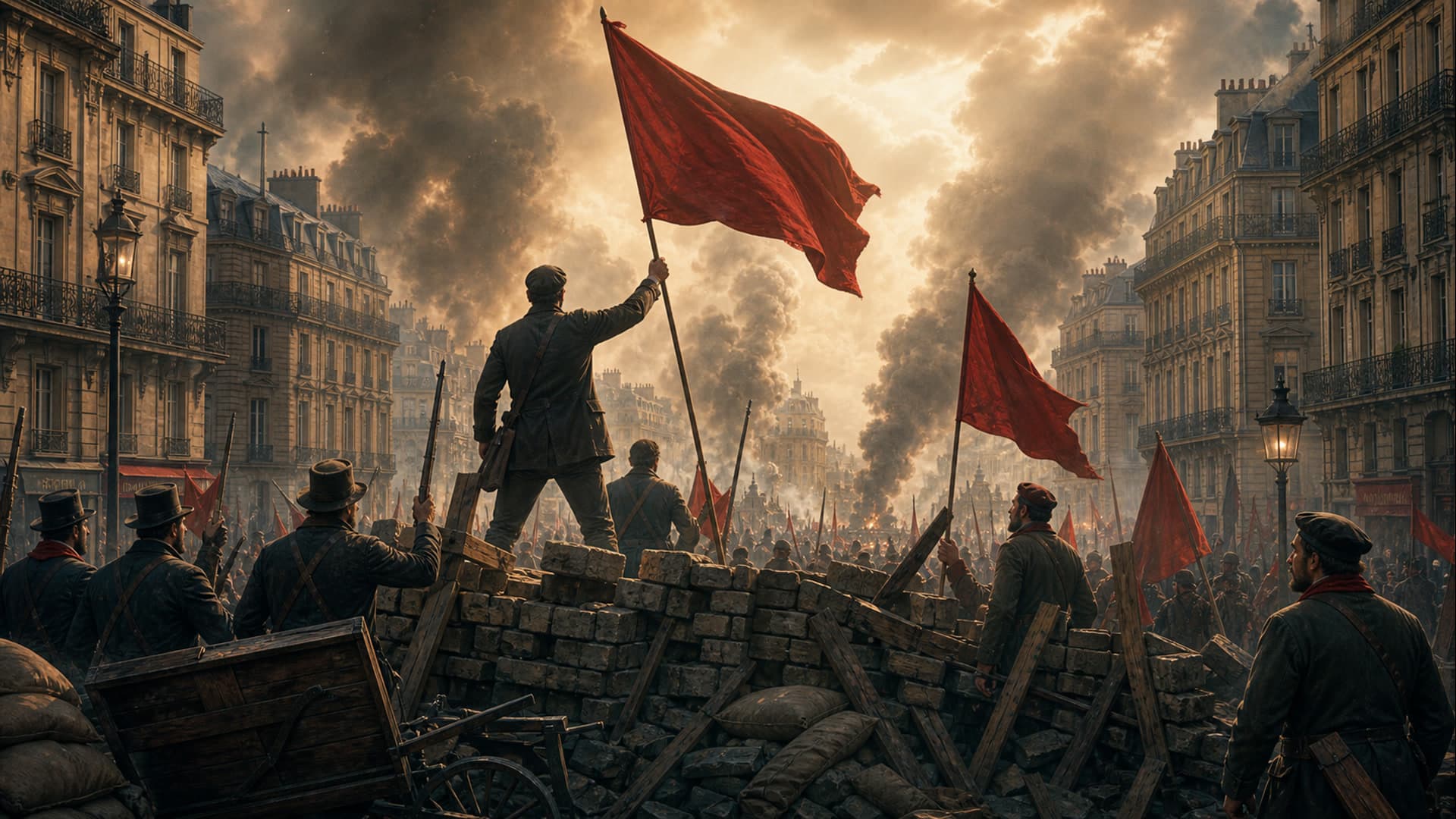
In 1871, Paris experienced 72 days of radical rule; Versailles crushed him in Bloody Week. Ideas and violence that marked the modern left.
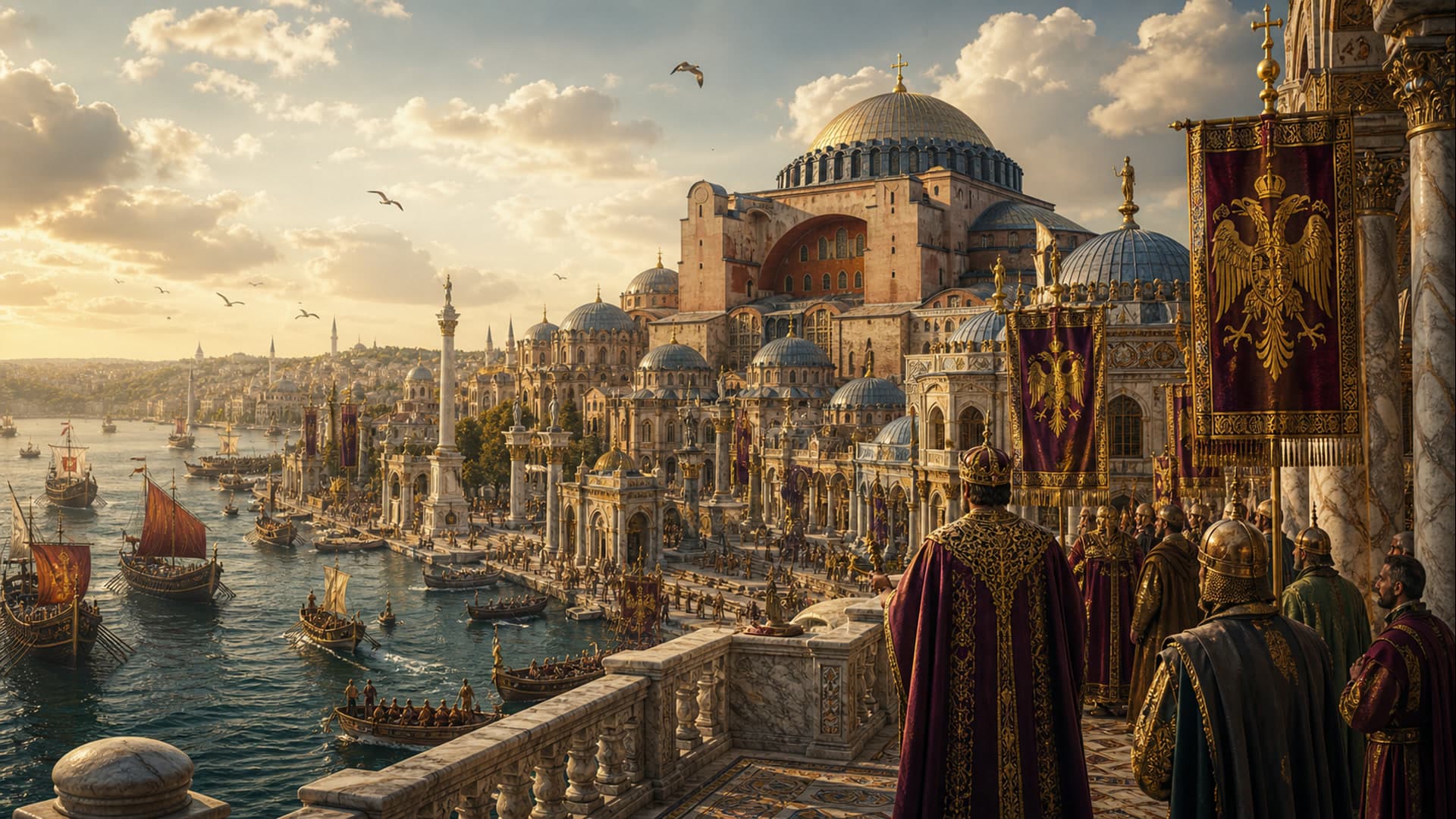
When Rome fell in 476, the Roman Empire kept on existing — for another thousand years, with its capital at Constantinople. That empire almost no one remembers was the bridge between the ancient and modern worlds, the guardian of the Greek texts that fu...
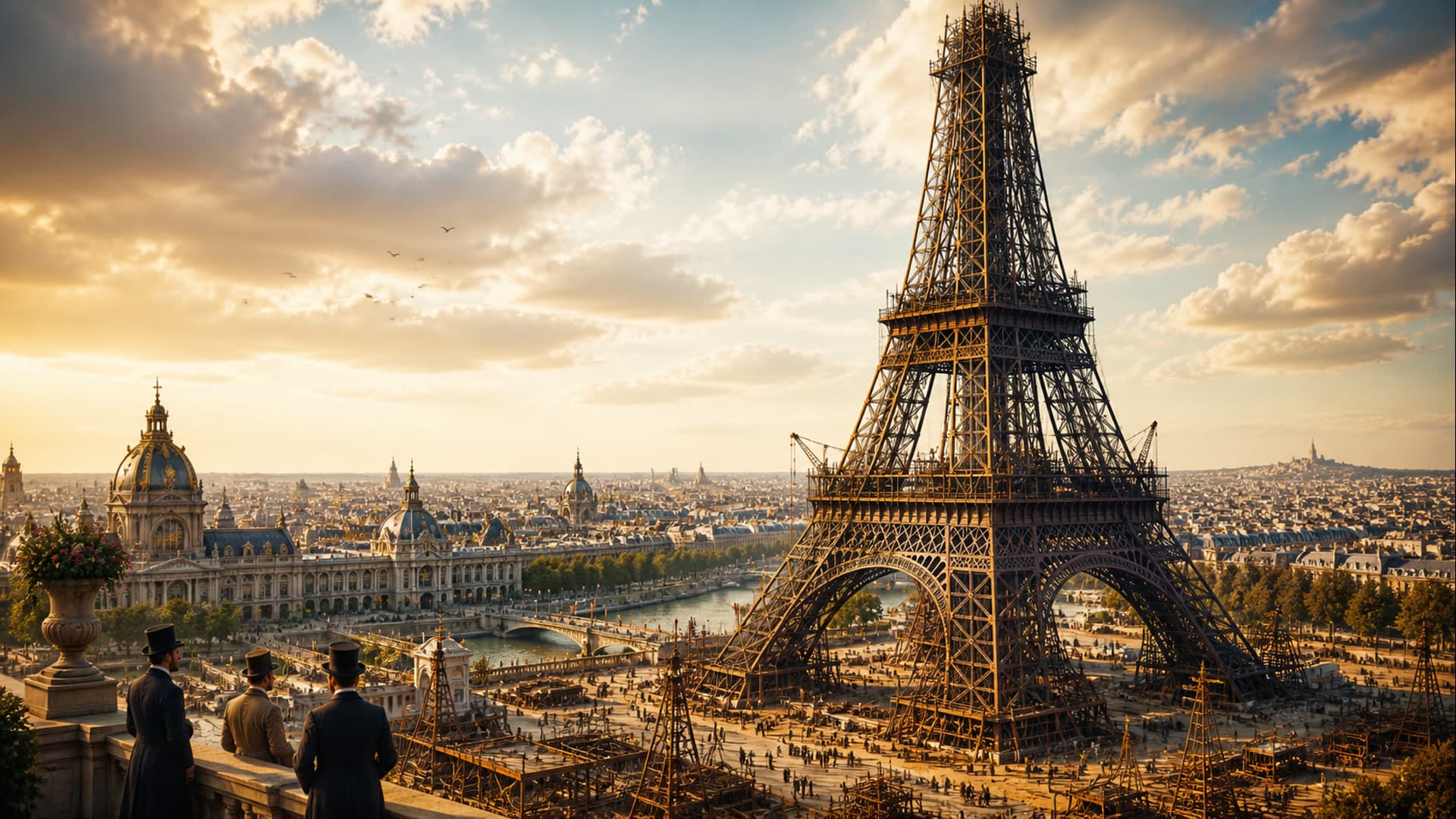
The Eiffel Tower wasn't Eiffel's idea, it was painted red, it was despised by France's greatest writers, and it came within years of being torn down. The man whose name it bears was facing fraud charges when it opened. This is the story of how the worl...